 Pen
Pen
GUEST BLOG: A Risky Business
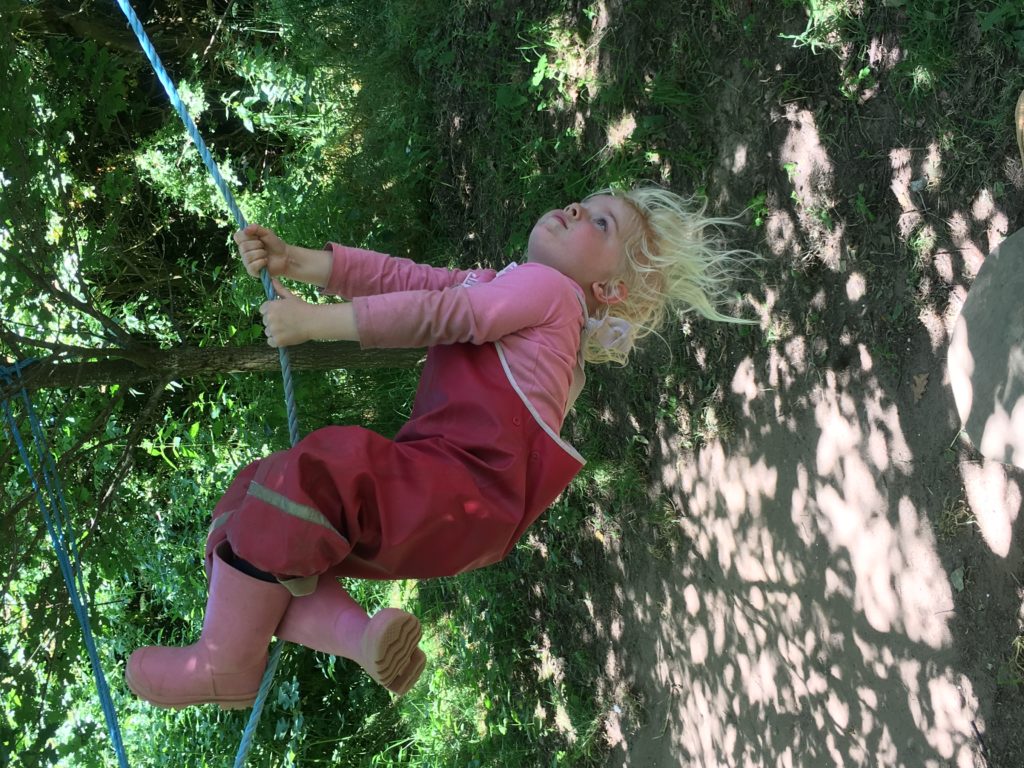
It is only recently (since I opened an outdoor nursery in 2017) that I started to think about what risk means; to children, parents and practitioners working with children. Several months ago, in the depths of the British winter, I was observing children climbing large containers twice their height, when they decided that they wanted to jump. It struck me in that moment that Tom aged 3, (known to me as an experienced tree climber, courtesy of several photographs shared by his mum) needed and wanted, to experience the exhilaration and feelings that accompany risk taking. I pondered, not wanting to influence his decision either way, but conscious of the fact that it was my job to keep him safe.
So, I asked him: ‘Do you feel safe?’. Despite this relying on the fact that Tom, himself, had some understanding of what feeling safe actually feels like, it seemed the most logical thing for me to establish before he took the plunge. As a responsible practitioner I am used to applying all of the risk assessments that ensure safety; this made me question what I should do. Tom jumped. Closely followed by Harry.Both landed safely and precisely without any harm; enjoying the feeling so much so that they quickly clambered back onto the containers to do the same again. And so they continued and in the days that followed, others joined in and their sense of accomplishment and value was clear to see.
It is, of course, well documented that children are naturally predisposed to seek out challenges that excite.
If our perceptions of risk affect the opportunities we present to children or we allow adults to interfere with this essential process, we could be sending subliminal messages that risk taking is not healthy and that children are incapable of being ‘trusted’.
This leads me nicely on to explain my thoughts about the impact of risk taking on children’s health and wellbeing. The pure joy etched onto the face of the two boys as they continued to climb and jump told me that they felt good! They were busy fulfilling that physical need or desire to seek out challenges and whilst exploring this, developed that ‘can do’ attitude and real belief that they can be ‘trusted’ to make decisions for themselves. I must point out that this has become a slight obsession of mine. Watching children making choices and empowering them, listening to them and embracing their ideas ( however unsafe one might deem them)affords them a level of respect. Respect they not only deserve, but that I know will serve them well in their future lives, where making difficult choices will almost certainly be a regular feature.
They are developing high levels of self-esteem, independence and resilience. It’s much easier of course, to jump in, in an effort to protect children from harm, but we must also ask ourselves: what happens if we simply don’t allow or provide opportunities for children to take and manage risk? We are doing them a complete disservice; we are ‘at risk’ of disempowering an entire generation and who knows how that might look in the years to come?

At the heart of this is bias; how do we ensure that everyone involved understands why taking risk is so important for our youngest? What information might parents and practitioners need to feel capable of supporting children exploring challenge? At a very basic level, this means establishing a whole setting approach and involving everyone from the outset. We’ve spent lots of time engaging our families and finding out what their views are so that we are able to explain the importance of risk and what this might look like. From our first contact with parents and carers, we discuss with them the overarching principles and ethos of our setting. This helps them to understand how challenge fits in to this on a daily basis and how essential it is for children’s wellbeing that we offer a wide opportunity of experiences for them to develop at their own rate. Considering the ‘ingredients’ that make up this environment is crucial for children’s emotional health and wellbeing (White 2007). We believe children need time, unrushed opportunities to play and, above all, choice! Children develop resilience and use outdoor embodied play experiences to make sense of the world around them; they are often surrounded by messages (explicit and implied) that they are ‘in danger’ and that they should ‘be careful’. Children playing outside become motivated to seek out adventure (Tovey 2007). Risk is, after all, part of life.
It would be foolish not to mention the facilitators, the adults who work alongside the children as they take the plunge. We must ensure that we offer a consistent approach that children understand and empower our staff so that they feel supported in offering risk taking opportunities and challenge their own feelings about what they may consider too risky!
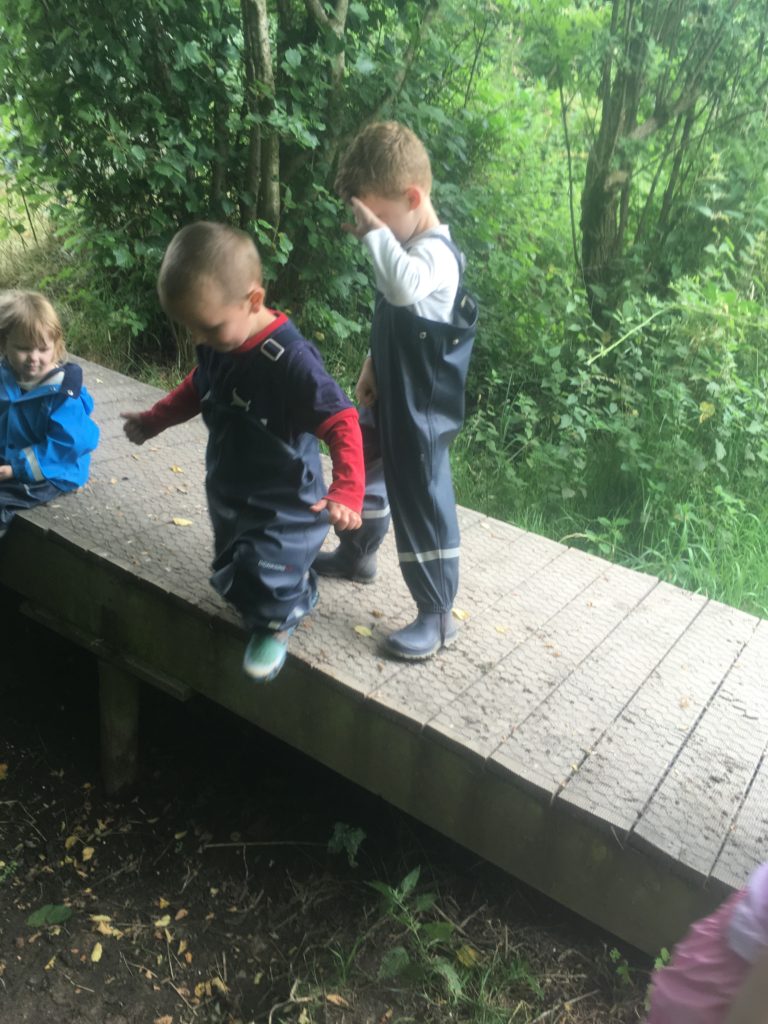
I should probably mention that at our totally outdoor nursery, there are many ingredients, from the naturally occurring elements to the rope swing and hammocks carefully placed within the woods. There is no getting away from the fact that being outdoors is special and offers something unique. Where else can you dangle from a tree, slide down a muddy bank or balance on uneven surfaces that provide a daily challenge?
“If we deny children the opportunities to be risk-takers, we may paradoxically risk creating a generation of children who may be either reckless in their pursuits of thrills and excitement or risk-averse, lacking confidence and skill to be safe but also lacking the disposition to be adventurous, creative and innovative in their thinking.” (Tovey 2007)
Rachel Macbeth-Webb
Beatle Woods Outdoor Nursery
Frogmore Grange
Frog Lane
Balsall Common
CV7 7FP
07816361590