 Pen
Pen
Do your children love books? -The role emotions play in reading
A Guest Blog
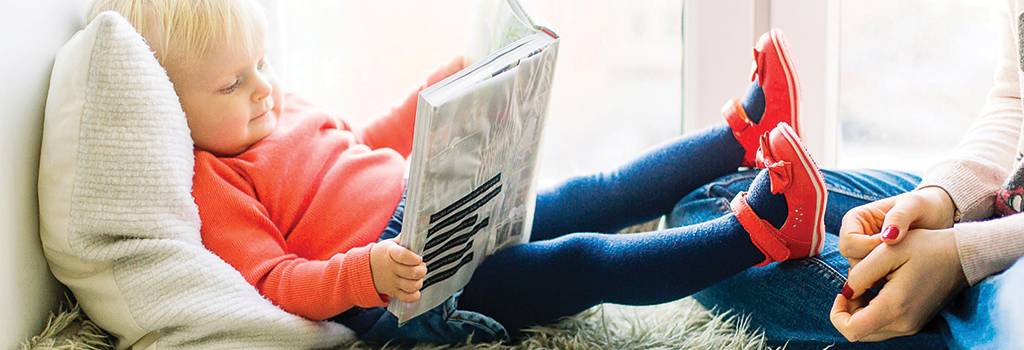
As a teenager my first proper job was in a library and my main responsibility was to put the returned books back on the shelves in the right place. The books were heavy, and the library was huge, so I was always grateful when I was asked to go and shelve the books in the children’s section. Two reasons, the books were lighter, and the room was smaller, but really, I loved it most because the books were just wonderful. The covers were enticing, the pages were beautifully laid out and they constantly surprised and engaged me and I confess to many times when I just stopped working and sat and read. It was here that I began to be fascinated by children’s books and that fascination has never left me; I watched the parents come in with their children and babies and snuggle up to read to them before taking their chosen books home and I remember the sights smells and the warmth of a truly enabling environment. I got to know the families and watched the children come back week in week out for more, I knew they were enjoying books and also knew that this would help them learn to read. It wasn’t just the quality of the books though, it was the experience and the emotional connection that developed through this simple act of sitting together and snuggling up with a book – it was bound to make the child feel safe and connected and therefore associate reading books with love and find it a deeply satisfying experience. I did not think at that time, as it was beyond my experience and imagination, about the children who did not attend the library or who never had a story read to them, I do think about them now – quite a lot.
Parents are regularly described as their children’s ‘first and most enduring educator’. It is the one area of education where it is assumed that parents will pitch in and support, both in terms of reading to their child and hearing them read. But the reality is many do not do this and its not difficult to see that a child who has been read to from birth has a great advantage over one that has had very limited experiences in this respect. As educators we are somehow expected to get children to read at a broadly similar age despite the obvious impact of wildly different starting points – so how can this be achieved? Evidence tells us that children make the best progress when they are taught through a structured phonics based system, but does this really do the job of creating inspired lifelong readers? My gut feeling is that it won’t be enough on its own, we somehow need to be able to create that rich emotionally rewarding connection with books for all our children if we are to make them into readers.
That emotional connection that I witnessed in the library that helps children to develop a love of books can be fostered through careful consideration of practice, ensuring all children get to experience the joy and wonder of books to hook them in and keep them reading forever. Without it my fear is that reading will be seen as a chore and some children will quickly disengage.
Tips for developing your practice in promoting a love of reading
- Make sure books are beautiful and well cared for – this sends the message they are valuable
- Make sure you promote how special they are and teach children to care for them and they are stored in a way that is easy for them to manage
- Ensure you include books that reflect children’s interests and experiences
- Books can be part of any area in a setting or classroom including outdoors – they don’t solely belong in a book corner – does your environment promote reading everywhere?
- Ensure you include and reread old favourites
- Introduce new books with enthusiasm and spend time discussing them before they go on display
- Talk to children about your favourite books and stories
- Share books regularly with small groups, pairs and 1-1 every day
- Let children be comfortable – don’t insist they sit legs crossed – it’s not a time for training.
- Use story sacks and other props to encourage further play and connection
- Invite parents / carers / grandparents etc into story sessions and let them just enjoy sitting and listening to them with their child.
- Let children and parents choose books to take home and share
- Encourage children to bring in books
- If you are near a library arrange visits and get parents to come along
- Make books with the children that they can share at home these can be a way of recording visits and events but they create powerful connections for children if they are ‘in’ the book.
- Make sure parents are hearing the message that reading is fun and value them joining in instead of pressuring them into workshops
- Never miss an opportunity to model reading stories – some settings even have a reading tent at fayres and events!
- Read, connect and enjoy books as often as you can
Maureen Hunt