 Pen
Pen
Setting Requirements
Staff Supervision
Supervision is used within a wide range of helping professions including social work, psychology and mental health. It is defined as
“… what happens when people who work in the helping professions make a formal arrangement to think with one another or others about their work with a view to providing the best possible service to clients and enhancing their own personal and professional development” (Scaife 2001, 4).
Scaife recognises that there are many definitions of supervision, since it is used differently within the various professions and can be seen merely as a chance to talk. Scaife differentiates supervision from conversation by pointing out that supervision focuses on the needs of the supervisee rather than the supervisor, has a contract and supports the supervisee in enhancing the services they provide to those they work with. Simply put, Hawkins and Shohet define supervision as
“… a quintessential interpersonal interaction with the general goal that one person, the supervisor, meets with another, the supervisee, in an effort to make the latter more effective in helping people.”
If Early Years practitioners are to provide the kind of encouragement and support necessary for the support, development and challenge of children and families, they need to be encouraged, supported and challenged as well, ideally through formal supervision. Within the professions of counselling, psychotherapy, social work and social care, it has long been accepted that people who work under pressure, with complexity, discouragement and distress, are at risk of becoming overburdened, discouraged and distressed as well (John, 2008, p. 56). Those practitioners are required to take part in regular supervision, which helps them to look at their practice, how their work is affecting them and to maintain, or regain, a healthier perspective and more helpful distance from the needs of others.
Supervision promotes well-being. Formal one-to-one supervision, within the line management structure of an Early Years setting, can support, encourage development and foster self-management in practitioners whose work requires them to encourage development and foster self-management in children and families. Good working relationships are developed when formal and informal support combine to help staff feel they are important and valued members of the team.
Organisational equal opportunities policies generally aim to ensure that all staff maximise their ability to perform effectively in their current job, have their individual skills and abilities recognised and, as far as is practical, are encouraged and supported to grow and develop personally and professionally. Staff supervision is a formal means to promote these egalitarian principles across a setting.
The Crucial Cs (Bettner & Lew, 1990) is a framework that practitioners find useful in remembering that equality does not mean that people are the same, but that throughout life, emotional well-being and constructive behaviour depend upon fundamental human psychological needs being understood and met. Four words beginning with the letter ‘c’ can help a setting work to ensure that the needs of staff members, teams, children and families are taken into account, their needs: 1) to belong, fit in, feel secure or feel connected; 2) to be competent, to improve and to take responsibility or to feel capable; 3) to feel significant, be seen as self-determining and able to make a difference or to feel they count; and 4) to feel able to handle difficult situations and overcome fear or to have courage. These promote mutual respect, genuine self-esteem and teamwork.

Social and developmental psychology research has demonstrated that being socially embedded means that we are motivated to find our place in our families, at school, at work and in society. As the Crucial Cs framework depicts, if we feel inadequate or inferior to others, then we doubt our place in the group, and instead of moving towards participation and co-operation, we defend ourselves against those demands. The beauty of the Crucial Cs is that they are valuable in understanding individual and group behaviour, as well as otherwise puzzling and potentially destructive dynamics in the workplace.
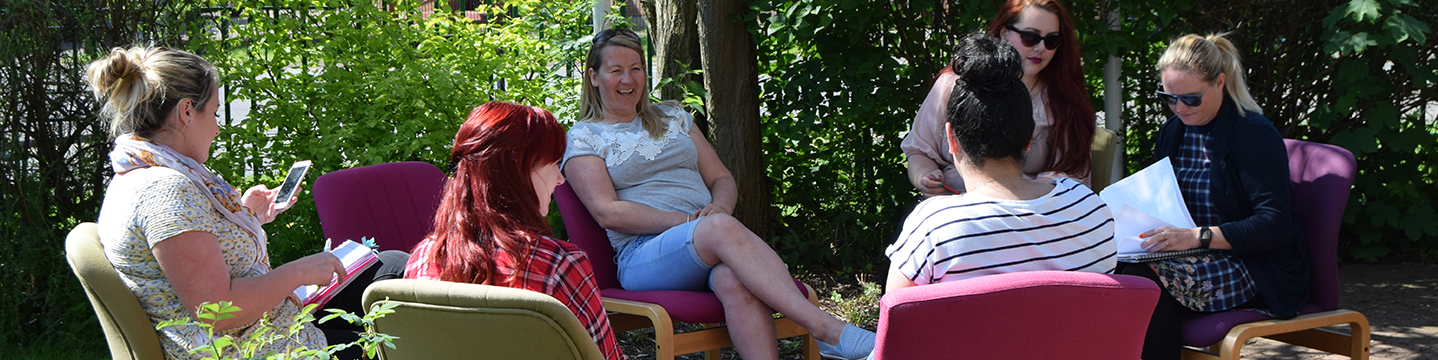
Team or group supervision: Promoting collaboration and sharing good practice the focus of team supervision is primarily direct work with children and families. However, unhelpful individual and team dynamics also need to be addressed in order to limit their intrusion into the work. Prior to each session, staff members need to decide upon which aspects of their work they wish to focus and state these clearly – especially when bringing material to the group. Supervisors must be clear about the specialist experience, knowledge, interests or expertise they are offering and ensure that their relationship with group members is explicit from the start.
The primary focus of team supervision is the support of staff members practically and emotionally, assisting them to share and develop their understandings and skills in working collaboratively with children and families. The setting’s core aims, values and principles necessarily inform the focus and process of team supervision and the boundaries within which different professionals work.
As highlighted in the EYFS, regular staff supervision within Early Years settings is a vital element in safeguarding the welfare of children and vulnerable adults. This is because it requires staff members and their line managers to take time away from the day-to-day work and provide a safe space in which to reflect on the needs of children and families. The EYFS also recognises the importance of supervision in promoting increased confidence, growth and continuous professional development among a predominantly female and often young workforce. Introducing and embedding effective staff supervision more widely within Early Years settings will make a positive difference for all those who spend their working lives looking after the needs of young children and their families.
John, K. & The Pen Green Team (2011). Staff Supervision in Children’s Centres – Guidance on Policy and Practice. Corby, Northants: Pen Green Research, Training and Development Base and Leadership Centre.
Adult Pedagogic Strategies
In 1997 we invited parents to take part in a study, funded by the Teacher Training Agency, to consider the pedagogic strategies that both workers and parents were using. We began by introducing a group of parents to the work on Adult Style being used in the Effective Early Learning Project (EEL) (Pascal & Bertram 1997).
Within the EEL Project, Pascal and Bertram drew on the work of Carl Rogers in order to think about how, as adults, we interact with young children, in order to facilitate their learning. Rogers, when working with adults, talked about the following three qualities:
• Genuineness or realness
• Prizing, acceptance, trust
• Empathy or empathic understanding
Pascal and Bertram translated these qualities into adult behaviours that facilitated young children’s learning:
• Stimulation or introducing new ideas or resources
• Allowing autonomy
• Sensitivity or listening and watching in order to intervene appropriately
At first the Pen Green workers and parents used the EEL framework to discuss what they were seeing on several video sequences of adult/child interactions.
We then spent time video-recording this group of parents, each with their own child, settling them into nursery and then supporting them in their play. We filmed the same children with their Key Worker from the nursery. All the parents and workers met and looked at the video material together and subsequently began to reflect on and analyse what were the effective teaching strategies that were being used. From this detailed analysis, we arrived at a framework of effective adult teaching strategies used by both parents and nursery staff. This study has been repeated several times since, most recently with parents and workers in our 0-3 provision (The Nest).
We have found the frameworks for thinking about our pedagogical interventions with children are helpful when engaging in peer-peer observations.
Although these effective pedagogic strategies were arrived at through looking at video material of children from two to four years of age, this framework is still useful for staff to critically reflect on their own practice with even younger children. There are, however, some other things that need to be taken into account when thinking about the very youngest children, from birth to two years:
Does the adult know about a child’s daily routine?
Does the adult know whether a child has a transitional object?
Does the adult know who are the important people in the child’s life?
Does the adult know how a baby likes to be held and rocked?
Does the adult know how a baby likes to be comforted?
Does the adult know a child’s home vocabulary?
Are these things evident in daily practice, through what you see and what you hear adults saying to children?
Peer-Peer Reviews
Using Peer-Peer Review to sustain and improve practice
Pedagogic observation can be carried out in different ways:
Peer-Peer observations in pairs – where practitioners buddy up in pairs and share a video sequence of one practitioner encouraging a child’s learning with the focus on shared improvement in practice
Practitioner observation – where a manager or lead professional observes a practitioner with the focus on appraisal and performance management
Joint Ofsted observation – where an Ofsted inspector observes the manager or lead professional observing a practitioner with a focus on how the lead professional reflects on the observation with the practitioner.
We have a strong tradition of carrying out pedagogical observations at Pen Green. We engage in ‘Peer-Peer’ observations using video, as the focus is on reflection and review of practice with peers and the learning that occur through the process. We found that the use of video in pedagogic observation was an essentially useful, albeit complex, and quite highly contextualised undertaking. The ethical considerations of the process need to be carefully considered.
The Peer-Peer review process and the subsequent discussion in each team is the key to effective teaching and learning. The objective of the dialogue is not consensus but critical discussion.
Pedagogical leads; Teachers/EYTs/Early Educators all participate in this reflective experience with their colleagues. In addition to the Peer-Peer review within the team, Senior Staff may view the film in a second review with the pedagogical leads and together they reflect on the pedagogical practice observed. The discussion relates to the pedagogic strategies and the Teacher/EYT standards, these discussions are documented to encourage further reflection.
The Peer-Peer review with Lead Practitioners and Senior Staff could provide workers with a deeper discussion relating to their practice, encouraging rigour with thoughtful challenge.
Carrying out the Peer-Peer reviews together also provides the opportunity for senior staff to: experience critical reflection first hand; dialogue about the teaching and learning that was taking place and jointly evaluate the effectiveness of the experience for the children involved. Through this thoughtful and thorough reflection and dialogical engagement senior practitioners build their own capacity to engage in this process with other practitioners.
The experience of working together as a team encourages collaboration and helps workers to identify the strengths of individual colleagues. Lead practitioners become attuned to the pedagogical strengths of the team and the areas of pedagogical practice where they will plan for further development.

SEND Policies
Under the Special educational needs and disability code of practice:0 to 25 years,
“providers must have arrangements in place to support children with SEN or disabilities (SEND). These arrangements should include a clear approach to identifying and responding to SEND. The benefits of early identification are widely recognised, identifying need at the earliest point, and then making effective provision, improves long-term outcomes for children.”
All those who work with young children should be alert to emerging difficulties and respond early. In particular, parents know their children best and it is important that all practitioners listen and understand when parents express concerns about their child’s development. They should also listen to and address any concerns raised by children themselves.

Staff Training and CPD
Staff training and continued professional development (CPD) are essential for enabling all children to access their education. As such staff need to have appropriate and regular training.
At the heart of the SEND reforms is the belief that children are entitled to achieve “the best possible educational and other outcomes” (DfE, 2015). To this end the individual needs of every child need to be understood and supported, this could include external training from partner agencies.
At Pen Green staff from across the teams can access support, training and CPD opportunities such as:
Speech and language therapy training in Picture Exchange Communication (PECS), Attachment training , British Sign Language courses, Epilepsy service emergency first aid, National portage association to become qualified Portage practitioners, Makaton ® training, IPSEA SEND law training.
Professional Development at Pen Green
We believe that developing knowledge and understanding through practitioner reflection and action research is a central feature of successful service provision. We offer practitioners in the early years, health and social sectors, a comprehensive range of professional development opportunities including a full early years degree programme, teacher training, short courses, conferences, seminars and bespoke training.
Our Approach – Experiential learning is the process of learning through your own experience. By facilitating this reflective approach to learning, participants will have the opportunity to consider their own values and beliefs in relation to their practice, children and families, and their colleagues and leadership.
Short Courses and Continuing Professional Development
All of our short courses offer opportunities for practitioners to reflect on their ‘practise wisdom’ and consider the best way to lead the learning of all children and adults as well as working alongside families and other agencies.
- Parental Involvement in their Children’s Learning (PICL) with a SEND focus
- Well-being and Involvement
- Supervision and Support
- Maths & Science in the Early Years (Schemas)
- Making Children’s Learning Visible (MCLV)
- Understanding Special Educational Needs and Disability
- Working with Children and their Families
- What the Law says
- Finding Sources of Support
Degree Programmes and Teacher Training Routes
Students on the degree programmes attend week long study blocks, either at Pen Green or within their local authority area. This structure enables participants to fully immerse themselves in their studies. We are experienced in providing support for learners through online study networks, library facilities and tutorial support which is offered in between study blocks by telephone, Skype or face-to-face, enabling students from around the country and in other countries to study with us.
- Foundation Degree Integrated working with children and families in the early years
- BA (Hons) Top-Up Integrated working with children and families in the early years
- Masters Degree Integrated working with children and families in the early years
- MA/PG Diploma/PG Certificate Working with children, young people & families: a psychoanalytic observational approach
- Early Years Initial Teacher Training Early years teacher status
- Initial Teacher Training (PGCE) Primary with an early years focus
- Initial Teacher Training (Salaried) Primary with an early years focus


Early Years SENCO Qualification Specification
The DfE has published the Level 3 Early Years SENCO qualification specification. The qualifications developed from this specification are intended to support early years practitioners to gain accreditation for the knowledge, understanding and skills they need to perform the Early Years SENCO role effectively. The qualifications are not mandatory. This recommended specification has been designed by early years experts and stakeholders supported by the Department for Education (DfE).
The DfE has also published a Level 3 EY SENCO job description, which is intended as guidance for early years providers and practitioners to help clarify the role of the Early Years SENCO in non-maintained early years settings.


Early Years SENCO Case Studies
Developing a Confident Workforce
A strategic approach to developing a Birmingham early years workforce confident and competent to deliver an inclusive Early Years Foundation Stage (EYFS) meeting the requirements of current SEND legislation.
Developing Inclusive Practice in a newly opened Setting
The private day nursery opened to provide funded early education to 2, 3 and 4 year olds on non-domestic premises. An Area SENCO was allocated to the setting who visited soon after opening to explain the support available to the proprietor manager around developing inclusive practice.
Improving whole setting inclusive practice and transition support for a young child with Autism Spectrum Disorder (ASD)
The setting was established 30 years ago and aims “to provide a happy, homely and stimulating environment in which children can thrive emotionally and educationally through planned and spontaneous activities”. OFSTED reported that “Children’s independence is well-promoted as they enjoy a range of carefully planned activities. This provides them with good preparation for their move into full time school. Staff encourage children to become gradually accustomed to their new environment and this ensures children feel safe and secure”. There are two trained setting SENCOs with a wide range of experience particularly in relation to speech, communication and language needs. They have successfully liaised with parents, speech and language therapists and health visiting teams.
Collaborative approach to support for transition of a child with social, communication needs from home to a setting
The early years setting has had involvement from the Educational Psychology and Early Years Service over a number of years based around individual children with SEND who have attended the setting at different times and so they know how to access support as required as well as having excellent relationships with the team. They have a very inclusive ethos within the setting and are prepared to ‘bend over backwards’ to get it right for children and families.
Improving transitions for children with Education Health and Care Plans into a mainstream school
The setting is a small charitable trust run term time only for children and families with additional needs. The setting is in a large semi-rural village and takes children from the surrounding villages and nearest town. All children are referred to the setting via health care, early years and family support professionals. The setting has a setting SENCO and a wide range of experienced staff supporting children with SEND.