 Pen
Pen
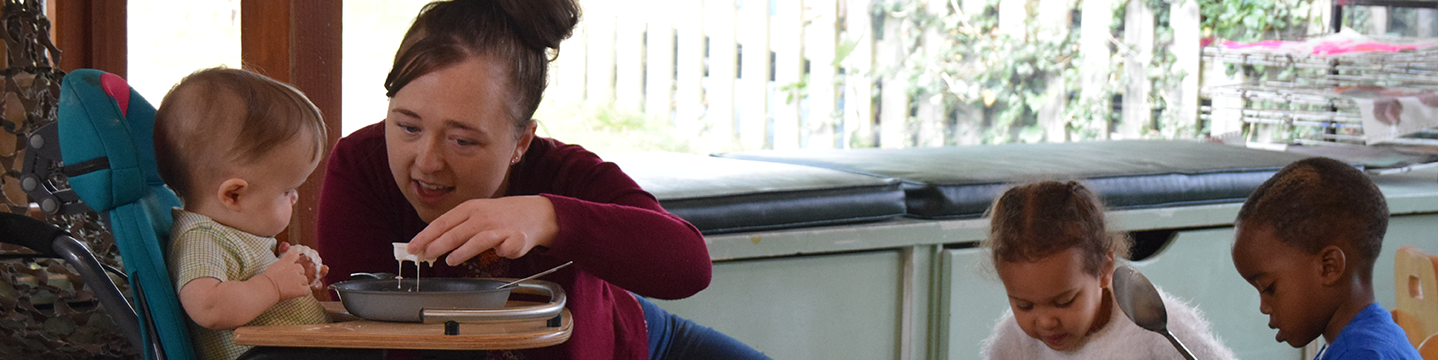
The Department for Education has published a new guide produced by Pen Green Children’s Centre – ‘A Celebratory Approach to Working with Children with SEND – Giving additional support in the Early Years’ (formerly ‘A Celebratory Approach to SEND assessment in the Early Years’) to help practitioners who may be supporting children who require additional help or children with Special Educational Needs and Disabilities.
A Celebratory Approach to Working with Children with SEND
Giving additional support in the Early Years

Introduction
This document has been written to support all early years practitioners to offer additional or differentiated support in a celebratory way to those children with a neuro-diverse pattern of development, an undiagnosed or diagnosed special educational need, to enable them to reach their full potential. Children must not be defined by their needs, we need to be courageous and aspirational for all children, igniting curiosity and encouraging them to be all that they can be. In 2021, the Early Years Foundation Stage framework was updated and changes to the learning and development, and assessment requirements were made, as well as some minor changes to the welfare requirements. The Department for Education (DfE) also published non-statutory curriculum guidance, Development Matters, to guide practitioners in planning their own curriculum.
Explicit messages in the document are;
- settings can design their own curriculum
- the framework does not prescribe a particular teaching approach
- the importance of early language and communication
- practitioners spend less time undertaking paperwork and more time working directly with children.
The Statutory Framework for the Early Years Foundation Stage (EYFS)
The EYFS is a statutory document that the early years sector must follow to support learning, development and care for children from birth to five. The statutory framework for the Early Years Foundation Stage (2024) is clear that practitioners must consider the individual needs, interests and development of each child in their care to ensure a strong foundation in their learning and development. Working in partnership with parents plays a key role in enabling all children to reach their full potential and gives practitioners an insight into the child’s home context.
The EYFS seeks to provide:
Quality
Practitioners must have a sound knowledge of how children learn and develop and be able to adapt their pedagogy to support all children. This could mean being alongside and engaging in children’s play and learning, extending their learning with language or resources, or offering direct support to help build children’s understanding and learning over time. Practitioners need to respond to children’s individual interests when creating play-based environments for children to explore, experiment, discover and master their learning. The environment needs to be welcoming and inspiring, where children have access to a range of high quality, appropriate resources that support children to make sense of their world and challenge their thinking.
Staff Supervision
Effective supervision provides a reflective space which supports the practitioner to understand the dynamics, between adults and children and between adults. The EYFS states;
“Providers must put appropriate arrangements in place for the supervision of staff who have contact with children and families. Effective supervision provides support, coaching and training for the practitioner and promotes the interests of children. Supervision should foster a culture of mutual support, teamwork and continuous improvement, which encourages the confidential discussion of sensitive issues.”
(DfE, 2024, Page 20, paragraph 3.32, Childminder EYFS, Page 29, paragraph 3.28, Group/School EYFS)
This is an important part of high quality practice and can lead to the practitioners feeling more confident in their roles. During supervision relevant training or coaching can be identified to support them to promote the learning and development of children. Continuous professional development is crucial for all staff and needs to be responsive to the needs of the children in their setting as well as their own needs.
A Secure Foundation
The Early Years are the formative years and have a powerful and lasting impact on children’s lives. Adults need to take the time to get to know children and their families and nurture their individuality. The environment needs to be emotionally warm where parents and staff think carefully about children’s transitions and respond flexibly to the child’s needs – no one size fits all.
Partnership Working
Building positive relationships with parents and external partners will be of great benefit to all. Working in a multi- disciplinary way will allow the adults to share their knowledge and expertise to offer a more holistic approach. Developing a shared language and understanding when working together will allow for a celebration of the whole child, and opportunities to jointly plan how best to support young children and their families. An example of shared language could be talking with parents about the theoretical lenses that are used to observe children in your setting.
Equality of Opportunity
All children have a right to high quality education. As early years practitioners we need to recognise children’s starting points, build on their interests and celebrate what they can do. Equality must be at the heart of every quality provision, creating a place where children, parents and staff all have a sense of belonging and their voices are truly heard. Staff must strive to get it right and need to learn from the community and not be afraid to adapt their approaches to respond sensitively to individuals.
The EYFS sets out a flexible framework that supports practitioners in planning a fluid and responsive curriculum, that is inclusive for all children in their setting and reflects their neighbourhood and communities. Children learn and develop in different ways and are not all on the same learning trajectories. Some children may require short term interventions and differentiation and others may need longer term additional or differentiated support. Practitioners can best support their learning if they consider the unique child and plan for rich and meaningful learning opportunities within an enabling environment. The adults need to have high quality interactions with children building positive relationships with each child and their family. Inclusion is a right, not a privilege, but it does not mean treating everyone the same. Practitioners must be alert to race, gender, class and cultural backgrounds. We need to get to know all children well and recognise where support is needed; tailoring the support to meet the need, whether this is a temporary need or a more specific identified need.
Our responses must be timely and practitioners should be anticipatory of a child’s needs when planning and differentiating the learning opportunities; we must not wait for a diagnosis or a ‘label of need’, as early intervention can make a profound difference to children’s outcomes. For children with SEND, they have a legal entitlement for reasonable adjustments to be made to enable them to access their right to education and this must not be driven by funding.
Young children are not empty vessels waiting to be filled, they are powerful thinkers. They come with their own ideas and ‘plans in mind’, but may not yet be able to articulate these to those around them. Practitioners should closely observe children and see what interests and motivates them; what is their hook? This information will give practitioners a lens into what intrinsically motivates the child and how best to plan a unique and responsive curriculum that will excite and challenge the child appropriately.
Engaging in consistent dialogue with parents is crucial at this stage, as they are the child’s first educators. Children need to be given time to adjust to changes and given time to transition into new environments and between spaces and routines. Transition times can be very stressful and anxiety provoking for children, parents and practitioners. Transitions are individual and need to be planned for as a process not an occasion.
When planned for transitions can be hugely important opportunities for positive experiences. As practitioners we can create positive transitions during sessions and at separations and reunions that become a blueprint for more significant milestone transitions.
For further information on transitions, please see: Sustaining warm and inclusive transitions across the early years: insights from the START project, European Early Childhood Education Research Journal (2019)
The Characteristics of Effective Teaching and Learning
The characteristics of effective teaching and learning should be at the heart of all early years pedagogy; where practitioners have respectful interactions with children, thoughtfully plan the environment and allow children to lead their own learning. How children learn is as important as what children learn. For some children it may be necessary to finely tune into their dispositions as this can help to shape the practitioners’ approach. Children need time to re-visit experiences, affording them time to consolidate and apply their ideas and learning. It may be beneficial for practitioners to slow down their pedagogy, not be tempted to play catch up or rushing children inappropriately.
The characteristics of effective teaching and learning are:
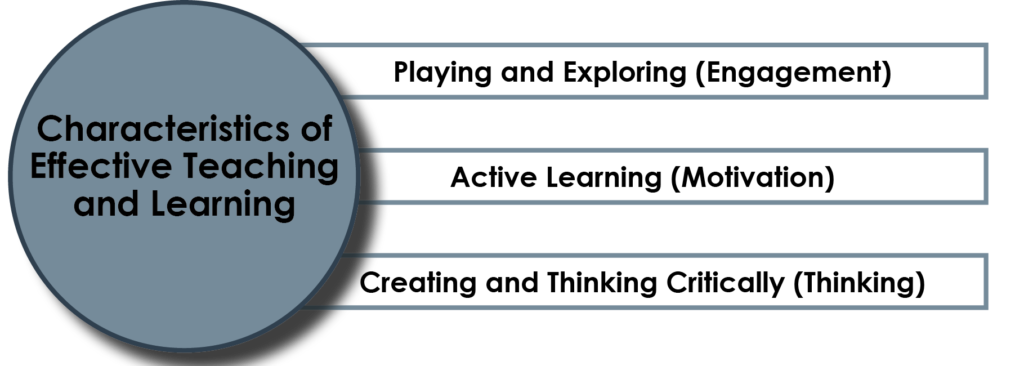
(DfE, Development Matters, 2021, p.12) Development Matters – GOV.UK
These characteristics are woven through all seven areas of learning in the EYFS, and develop as children have more opportunities to have a go, persist with difficulty and develop their own strategies for doing things.
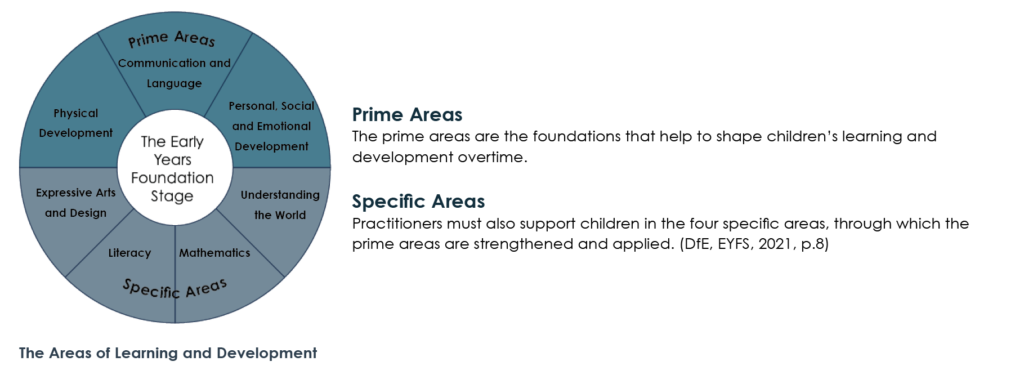
The Areas of Learning and Development
The Early Years Foundation Stage has seven areas of learning and development. The seven areas are grouped into two categories; prime areas and specific areas. Each of the seven areas of learning and development are broken down into aspects and each area is inter-connected to support children’s learning and development. Learning is not a linear process and children learn and develop at their own pace.
Assessment
Assessment plays an important part in helping parents, carers and practitioners to recognise children’s progress, understand their needs and to plan activities and support (DfE, EYFS, 2021, p.18). Formative assessment helps practitioners to get to know each child and can inform how they plan for individual learning and development. The guidance is very clear that on-going and formal assessment must not require excessive paperwork or mean that practitioners spend prolonged periods of time away from engagement with children. The assessment approach should draw on what practitioners already know about the child, their own professional judgements, observations and information from parents. Wherever possible practitioners should encourage parents to share their child’s assessments with relevant professionals, particularly if their child has an undiagnosed or diagnosed need. Providers must have consent from parents prior to sharing information about individual children with other agencies.
Assessment for children with SEND is as vital as ever. Not all observations need to be written, practitioners can use their professional judgements. Some Local Authorities will expect specific assessment proformas to be completed and may require written observations overtime. Settings can also choose their own observation and assessments tools. Exemplars can be accessed from p.70 of A Celebratory Approach to SEND Assessment in the Early Years
Statutory Assessment in the EYFS
Two Year Old Progress Check
Early years practitioners are expected to review a child’s progress when they are aged between two and three years old. This review must be recorded and a short written summary shared with the child’s parents/carers. The summary should identify the child’s strengths, celebrating what the child can do and documenting any areas where additional support may be needed. It must also outline the practitioner’s planned response to any issues or concerns raised in the summary.
Practitioners should encourage parents to share the information in the summary with any relevant professionals who are currently engaging with the child or family. In some areas the two-year progress check is undertaken alongside a health visitor which often provides a more integrated approach. For more information please refer to the Early Years Foundation Stage Early Years Foundation Stage GOV.UK (DfE, 2024, Page 13, Childminder EYFS, Page 20, Group/School EYFS )
As your child moves into the reception year they will undergo some more formal assessments such as the Reception Baseline Assessment and the Early Years Foundation Stage Profile.
Reception Baseline Assessment (RBA)
The Reception Baseline Assessment (RBA) is a short, task-based assessment of a child’s early literacy, communication, language, and mathematics skills when they begin school. The assessment is designed to be inclusive and modified materials are available to make it accessible for children with SEND. The Department for Education says that, by giving each child a Baseline Assessment when they first start primary school, schools will not only have a clearer idea of how much progress their pupils are making but should also be able to identify which children are likely to need extra help. Further information can be found at: Reception Baseline Assessment GOV.UK
Early Years Foundation Stage Profile (EYFSP)
At the end of the Early Years Foundation Stage, reception teachers must assess each child’s learning and development against the expected level, set out in the seventeen Early Learning Goals (ELGs). This is the Early Years Foundation Stage Profile (EYFSP) assessment. This must be completed for all children, including those with SEND. For more information please refer to: Early Years Foundation Stage Profile Handbook GOV.UK
Safeguarding and Welfare Requirements
It is well known that SEND is a risk factor for abuse of varying types. Children with SEND are 3.8 times more likely to be neglected or physically abused, 3.1 times more likely to be sexually abused, and 3.9 times more likely to be emotionally abused. Findings show that 31% of children with SEND suffer abuse, compared with 9% of children without SEND. There are a number of reasons for this, including difficulties in communication, especially in non- verbal children. We need therefore to be especially vigilant when caring for children with SEND and be alert to changes in appearance and/or behaviour. Relationship building with families is essential to this work. DCSF, 2012 (p.46) Safeguarding Disabled Children GOV.UK
All providers must have policies and procedures in place to safeguard children. These should be in line with the guidance and procedures of the relevant Local Safeguarding Partnership (LSP). All staff must be trained to understand safeguarding policies and procedures. Providers must also ensure the suitability of adults who have contact with children, promote good health, manage behaviour, and maintain records, policies, and procedures.
A named practitioner must be designated to take lead responsibility for safeguarding children in every setting (Designated Safeguarding Lead – DSL). For further information on the welfare requirements please see: Early Years Foundation Stage GOV.UK
A key issue identified by practitioners is the difficulty in demonstrating progress for children with SEND when using broad statements linked to the EYFS areas of learning and developmental stages. Early years practitioners should adopt a method of formative assessment, using a variety of methods to plan for children’s needs and interests, appropriately assessing children’s development and progress over time using their own professional judgements. Parents knowledge and observations of their own child and professional partners who are currently engaged with the child play a significant role in this process. This cycle needs to be repeated regularly as children’s learning and development is not linear and their needs vary and change. If progress is not sufficient, further measures such as an external referral, summative or statutory assessment could be considered.
“Every child deserves the best possible start in life and the support that enables them to fulfil their potential. Children develop quickly in the Early Years and a child’s experiences between birth and age five have a major impact on their future life chances.”
The Early Years Foundation Stage (EYFS) Statutory Framework,
(DfE, 2024, Page 6, Childminder EYFS, Page 7, Group/School EYFS )
Only too often this is not the experience for young children with additional learning needs, undiagnosed, and diagnosed Special Educational Needs and/or Disability. Parents and practitioners may not have the experience of navigating the many systems involved in caring for, or seeking the support of partnership services that are needed to give every child the best start in life. Frequently practitioners are faced with additional workload and are offered limited continuous professional development that specifically links to supporting children with SEND and their families.
All children deserve to have an advocate who will champion their wants, needs and rights. All children have a “voice” but the way they communicate their wants, needs and rights will differ. It is our responsibility as practitioners to ensure that a child’s voice is not overlooked because it is not communicated in conventional ways for example through speaking. We must capture the voices of children whether it is verbal and non-verbal.
Within this document, we hope to achieve a central point of reference and guidance to help practitioners and parents to proactively move forward with a planned and graduated response to supporting young children in the best way possible.
Within the EYFS there is an expectation that all providers must have arrangements in place to support children with SEND and have a named SENCo if they are funded by the local authority. This includes Maintained Nursery Schools, private, voluntary, and independent settings. Childminders are encouraged to identify a person to act as a SENCo. (DfE, 2024, Page 24, Childminder EYFS, Page 33, Group/School EYFS)
Supporting all Children to Fulfil their Learning Potential
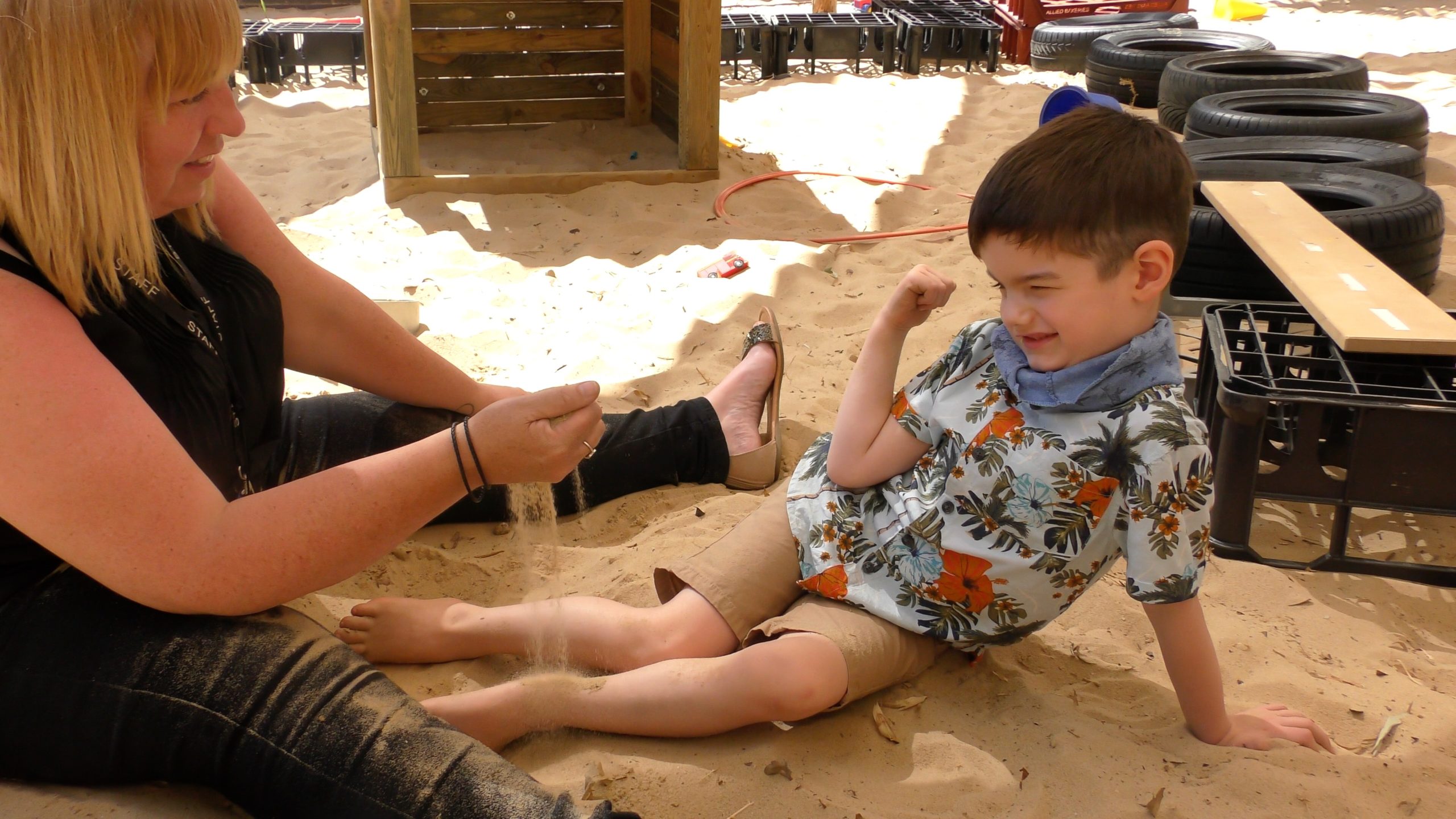
High quality early education and care is important for all children but particularly powerful for children from disadvantaged backgrounds and for children with delayed or disordered learning and development.
Working with parents in a reciprocal way, where practitioners acknowledge and respect that parents are the experts on their children, will enrich understanding and promote a shared dialogue and some continuity between home and the setting.
Children who are at earlier stages of development than would be expected need practitioners who observe them in play, noticing what they are doing and where their challenges lie. In response to this, practitioners need to plan meaningful opportunities to support children to fulfil their learning potential. Through working closely with children in this way, you will be able to use your professional judgements to make the right decision about the plans for the appropriate next steps in the child’s learning and any additional support that is necessary in a timely manner.
For some children it may be enough to implement next steps and some differentiated interventions to secure their development. For others the pathway may be more challenging, in these cases practitioners must act promptly as early intervention is key to ensuring all children are supported to fulfil their learning potential.
Guidance and Frameworks
Development Matters, (2021)
Every child deserves the best possible start in life. Children learn more in the first five years than they do at any other stage in their lives. We must make sure that every day counts.
All children have a right to thrive in the early years.
“No job is more important than working with children in the early years…. the actual learning of young children is not so neat and orderly.”
Development Matters, p.4 Development Matters – GOV.UK
Practitioners will need to get to know children well, and value what they are able to do and enjoy, before making any professional judgements based on broad developmental ages and stages. All children will be able to make progress if they are supported appropriately. Planning for individuals needs to be meaningful, and the curriculum must be ambitious for all children regardless of need. All children need to have an equal chance of success. No one size fits all, practitioners need to be responsive and differentiate their approaches to engage and motivate children to play and learn.
The Development Matters document has been written for the early years sector and offers a top-level view of how children develop and learn. It guides but does not replace professional judgements. This is not a tick list. This guidance can also support practitioners to meet the requirements of the Early Years Foundation stage.
The learning and development section does offer a development pathway based on broad ages and stages – the guidance and observation checkpoints can be used to help identify if children are at risk of not meeting their developmental milestones. Early intervention is key. Practitioners must strive to give all children the best start as this will have a powerful and lasting impact on their success in the future.
The Children and Families Act
The Children and Families Act (2014) states that;
“A child or young person has special educational needs if he or she has a learning difficulty or disability which calls for special educational provision to be made for him or her.”
The Children and Families Act (Part 3, Section 20 (1)).
The SEND Code of Practice 2014 (most recently updated Jan. 2015)
Children’s special educational needs and disabilities are generally thought of in the following four broad areas of need and support.
- Communication and Interaction
- Cognition and Learning
- Social, Emotional and Mental Health
- Sensory and/or Physical Needs
Within Section 5 of the SEND Code of Practice it outlines the expectations of early years providers (p.80-90)
- Those in group provision are expected to identify a SENCo. Childminders are encouraged to identify a person to act as a SENCo, and childminders who are registered with a childminder agency or who are part of a network may wish to share that role between them.
- All publicly funded early years providers must promote equality of opportunity for children with SEND.
- All early years providers are required to have arrangements in place to identify and support children with SEN or disabilities and to promote equality of opportunity for children in their care.
- All early years providers should take steps to ensure that children with medical conditions get the support required to meet those needs.
- All settings should adopt a graduated approach with four stages of action: assess, plan, do, and review (see p.24-25).
- Where (despite the setting having taken relevant and purposeful action to identify, assess, and meet the special educational needs of the child) the child has not made expected progress, the setting should consider requesting an Education, Health, and Care needs assessment.
All early years providers have duties under the Equality Act 2010. In particular, they must not discriminate against, harass, or victimise children, and they must make reasonable adjustments to prevent them being put at substantial disadvantage.
Early years providers and educational settings should have arrangements in place that include a clear approach to supporting and assessing children with SEND. This process must be a collaborative one where parents are actively engaged. This should be part of the setting’s overall approach to supporting the development of all children and creating a sense of belonging. Inclusive practice is not about all children being treated the same – it may mean adaptations, differentiation, extra support, and seeking specialist advice to ensure equal opportunities for all. Early identification and intervention can significantly reduce the need for more costly interventions at a later stage. Staff training and on-going continuous professional development is crucial when supporting children with SEND. Some children will require specialist medical interventions whilst in the setting, and practitioners may need specific specialist training. This will require the provider to liaise with parents and external partners to make sure training has been put in place for staff to support the child during transition and their time in the setting. This needs to be done in a timely manner and, where possible, avoiding delays which could have a detrimental impact on the child’s right to access their education.
The Engagement Model (2021)
The engagement model is an assessment tool that helps schools meet their duties in supporting children who are working below the level of the National Curriculum and who are not engaged in subject-specific study.
The model has five areas:
- Exploration
- Realisation
- Anticipation
- Persistence
- Initiation
The engagement model allows professionals to identify and celebrate all children’s progress, including linear and lateral progress.
The engagement model is a tool that can be used in Key Stage 1, however it may be helpful for practitioners to know this is the type of model that could possibly be used.
The Rochford Review (2016)
The Rochford Review outlines the differences between formative and summative assessment and further considers the different purposes of statutory and non-statutory assessment (p.10).
When working with children with SEND, the aim cannot simply be to ‘narrow the gap’ since, as previously recognised, for some children ‘narrowing the gap’ and enabling a child to ‘catch up’ are not appropriate expectations. We must have high aspirations for every child and have robust assessment processes in place to support children to be all that they can be.
The review also recognises;
“age-related expectations are not appropriate for a significant proportion of pupils; and that the way we measure their progress accounts for potential differences in the way these pupils learn.”
The Rochford Review p.5.
Signposting and Networking
Working in a multi-disciplinary way allows for a holistic approach to supporting young children with SEND. It is important to use local and national services and resources to ensure practitioners have access to relevant training and continuous professional development to enhance their practice. Working with parents and partner agencies will bring a team around the child, encouraging a shared dialogue and understanding which, in turn, will lead to a more consistent approach to working together for the benefit of the child.
Early years settings will need to familiarise themselves with the services and resources available to support children with SEND and their families. When identifying resources and services consideration should be given to your setting, locality, local authority and national providers.
There is not a definitive list of services and resources for supporting children with SEND. The Local Offer is a good starting point to gain an understanding of what is currently available in your area.
The Local Offer
All local authorities must publish a Local Offer, setting out in one place, the information about provision they expect to be available. The Local Offer spans across education, health and social care for children and young people in their area who have SEND, including those who do not have Education, Health and Care (EHC) plans. In setting out what they ‘expect to be available’, local authorities should include provision which they believe will actually be available.
The Local Offer has two key purposes:
- To provide clear, comprehensive, accessible and up-to-date information about the available provision and how to access it.
- To make provision more responsive to local needs and aspirations by directly involving disabled children and those with SEN and their parents, and disabled young people and those with SEN, and service providers in its development and review.
The Local Offer is not simply a directory of existing services, it is a working document that can be added to by the local authority and its community. The Local Offer includes provision in the local authority’s area and services that would be beneficial outside of the local area. It includes relevant regional and national specialist provision.
Local authorities must involve parents, children, young people and key stakeholders in developing and reviewing the Local Offer. The Local Offer relies on settings giving feedback about what works and what does not.
The Local Offer should be:
- Collaborative
- Accessible
- Comprehensive
- Up to date
- Transparent
To access your ‘Local Offer’ you will have to go on-line and search Local Offer on your local authority’s website or contact your Area SENCo for advice and guidance.
Accessing Resources via your Local Authority
Alongside the Local Offer, your local authority will offer a range of services, resources and training that practitioners and parents can access for support and guidance. In order to find out more about what is offered in your locality, you will need to access your local authority’s website via your preferred internet browser. Once you have accessed the local authority website there will be a search box located near the top of the page. Insert SEND into the search box, this will navigate you to the relevant linked pages which are currently available in your locality.
Network Meetings
Your local authority may offer SEND specific network meetings; these meetings are facilitated by a representative from the local authority. The aim of the meetings are to provide an opportunity for SENCos and other professionals who are supporting children with SEND to come together and network. The meetings allow opportunities for multi-disciplinary working:
- Sharing examples of good practice
- Sharing skills and expertise
- Signposting
- Training and CPD.
Network meetings offer a space to raise specific issues/concerns with a view of gaining advice and strategies to overcome the issue or concern. Often the facilitator will arrange for training to be delivered within the meeting or signpost to training available in the locality, online or nationally.
Area SENCo
You may find that your local authority has its own Area SENCo. This is a named professional with the responsibility for supporting and making links between education, health and social care to facilitate appropriate early provision for children with SEND. Typically, the role includes:
- providing advice and practical support to early years providers about approaches to early identification, assessment and intervention
- providing day to day support for setting based SENCos
- strengthening links between settings, parents, schools, social care and health services
- developing and disseminating good practice
- supporting the development and delivery of training
- developing links with existing SENCo networks
- informing parents of and working with local impartial information, advice and support service, to promote effective work with parents and children.
Making Links with Local Partners
The role of the SENCo can at times feel like a lonely one, but it should not be a role undertaken in isolation. It is crucial that SENCos and practitioners familiarise themselves with good quality services in their community, ensuring they invest time in making links with the services spanning across all three sectors: Education, Health and Social Care.
This may consist of taking time to forge positive working relationships with your local:
When offering children with SEND the care and support that they have a right to, you as a SENCo will be required to work collaboratively with external partners and agencies to achieve the best outcomes for each and every child.
- Schools/nurseries
- Children’s centres
- Local authority SEND representatives
- Childminders
- GP practices
- Speech and language therapists
- Community Paediatricians
- Health Visitors
- Family support services
Key Practitioner Skills
When working collaboratively with parents of children with SEND, the key worker plays a significant role in building trusting relationships with both the child and their parents. Through reciprocal dialogue with parents, practitioners will gain a better understanding of the child. The key worker needs to celebrate what the child can already do as well as acknowledging early identification of need and planning for appropriate, tailored support.
“Every child can make progress if they are given the right support”
(DfE, Development Matters, 2021, p.5) Development Matters – GOV.UK.
This statement can also be applied to practitioners as we are developing our knowledge and skill base every day. In early years, inclusive practice, early identification and early intervention play a significant part in children’s life chances, we must make every day count. Early years requires practitioners to have key skills that are relevant to the children they are working with, for example knowledge of the picture exchange communication system (PECS), Makaton, both of which can be used universally and for more targeted interventions for children with SEND. Accessible training is imperative to enable early years practitioners to understand and develop the range of skills needed to:
- ensure all children are appropriately supported
- work collaboratively with parents
- work in partnership with other agencies and the local authority
- access other services and funding opportunities
- complete SEND specific documentation.
Working in early years is rewarding and challenging, it is important that practitioners have access to regular supervision and appropriate training.
Engaging with Parents, Carers and Families
The EYFS seeks to provide partnership working between practitioners and with parents and/or carers. Working with parents is paramount, we know that this can have a powerful and lasting impact on children’s life chances. Support should be family-centred, and should consider the individual family’s needs and the best ways to support them.
Easen, P. (1992), recognised the importance of working in partnership with parents. Easen explained parents have a ‘specialised, personal knowledge’ of their child’s development and staff have a more ‘generalised knowledge’ of child development. Through an interaction of the two, a broad and accurate picture of the child’s development and progress can be built.
Practitioners should always start with the information a parent is able to offer about their child. Respecting parents’ knowledge about their own child and what they currently do at home is vital to support their children’s learning. Parents’ early observations of their child are crucial and will help practitioners get to know each child, celebrating who they are and what they are able to do. Practitioners need to invest in establishing relationships with parents and carers, building trust to allow families to tell their own stories in their own time. This will help practitioners to understand who each child is, celebrate them for who they are and how best to plan for their needs to support their development. This information will support practitioner to identify the child’s starting point regardless of their chronological age. Parents should be engaged at all stages contributing their insights to assessment, planning next steps, and reviewing their child’s progress.

This recommendation reflects the guidance offered within the Statutory Framework for the EYFS and nowhere is this more clearly demonstrated than in the following four principles:
- A Unique Child – Every child is a unique child, who is constantly learning and can be resilient, capable, confident and self-assured
- Positive Relationships – Children learn to be strong and independent through positive relationships
- Enabling Environments – Children learn and develop well in enabling environments, where experiences respond to their individual needs and there is a strong partnership between practitioners and parents and
- Learning and Development – Children develop and learn in different ways and at different rates.
(DfE, Statutory Framework for the Early Years Foundation Stage, 2024, Page 6, Childminder EYFS, Page 7, Group/School EYFS)
Home Visits
Home visits can be beneficial for children, families and practitioners. Knowing children well can involve getting to know them in their home environment. Practitioners need to be sensitive to cultural differences when visiting families in their homes. Children remember a home visit for many months, if not years. Home visits can play a really important part in forging relationships with families and providing a space for parents to discuss a whole range of different matters in the safety of their own home.
The initial home visit to a family is the most important visit, as this is where the foundations of the relationship and trust with the child and their family begins. What we want for all children is for them to be rich in potential, strong, powerful, competent and, most of all, connected to adults and children. On a regular basis practitioners should come together to think about their ‘image of a child’ and how they will support all children to be all that they can be.
Using documentation to capture the voice of the child on the initial home visit establishes the importance of honouring the child’s contribution. On a first home visit, practitioners can use a proforma to gather information about the child in dialogue with the parents or important people in the child’s life.
Getting to Know You – A New Zealand Framework for Evaluation
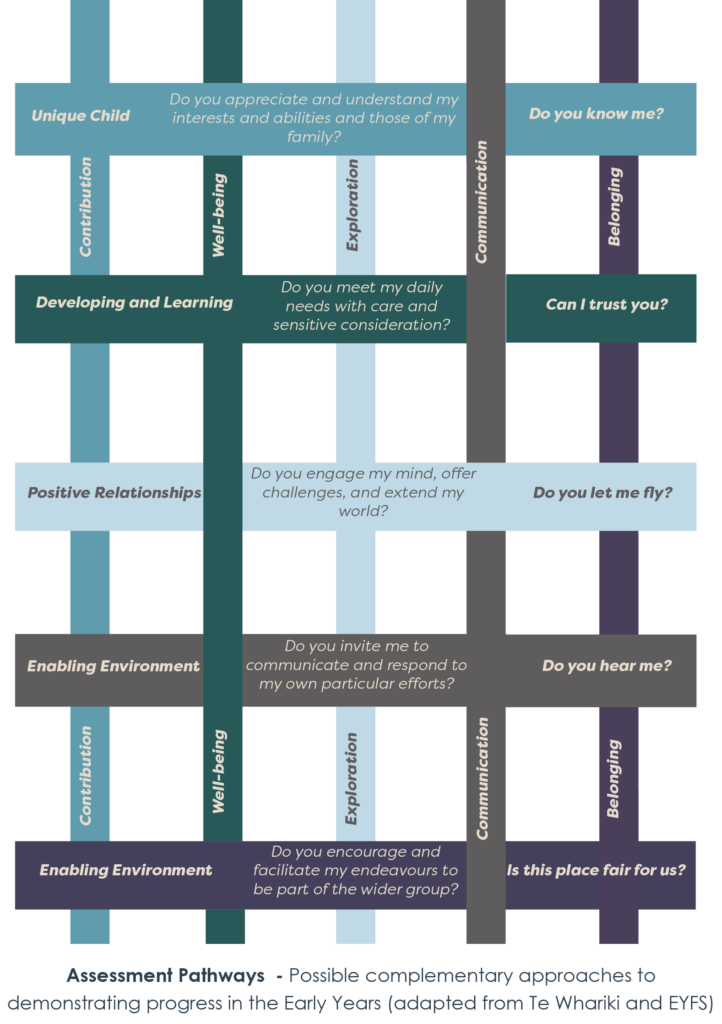
Margaret Carr and colleagues have developed an evaluation framework for practitioners with five powerful questions from the child’s point of view which can be used to get to know children when they start in your setting. These questions come from the five strands of the New Zealand Te Whãriki’ curriculum.
These questions can be used to enable practitioners to reflect on how they know, understand and relate to the children they are working with. They also help us to strengthen our relationships with children, plan for meaningful learning opportunities, celebrate their achievements and share this with the key adults in their lives.
- Do you know me?
- Do you hear me?
- Can I trust you?
- Is this place fair for me?
- Do you let me fly?
(Carr et al, 2002)
Dialogue with Parents
Any field of knowledge has its own language or jargon. A specialist language may be a barrier to communicating with parents. If we want power to be equally shared with parents, the first step is to share any specialised language we are using. When we share this technical language with parents, we also share our knowledge about how their children learn. We could choose to simplify our language, but parents might find that patronising. We can hardly claim a wish to be equal partners if we arbitrarily decide that the language is too difficult for parents to understand. As soon as we begin to share language about the curriculum, usually on the initial home visit or settling in session, we are making our pedagogy more explicit. Each explanation we offer helps us to understand the concepts more fully.
Although the dialogue with parents can begin with an initial home visit (before a child starts in your setting) and continues throughout each child’s time at a setting, we do not expect parents just to pick up ideas in a haphazard way. We need to plan and devote time to giving every parent the opportunity to learn about the key child development concepts we are using in our settings to help us understand their children’s learning. There are four concepts that are particularly helpful:
- Involvement (Laevers, 1997)
- Well-being (Laevers,1997)
- Adult style (Whalley & Arnold, 1997)
- Schemas (Arnold, 2010; Athey, 2001; Bruce, 2015; Nutbrown, 1994)
Schemas are patterns of action that children demonstrate when they are exploring the world and trying to find out how things work. Children may try out the same action on a variety of different objects. They come up with their own working theories of how things work. They continue to test their theories and ideas. Sometimes they discover exceptions to the rules that they have established with their working theories.
Laevers, an early years researcher from Belgium, has spent many years researching young children’s levels of Involvement. Rather than testing young children or focussing on outcomes, he has been focussing on process. Laevers says that we know when children are learning from signals such as concentration, satisfaction and being absorbed with what they are doing.
As well as researching and observing children’s Involvement, Laevers and his team were also very interested in young children’s emotional well-being. Laevers talks about a child feeling like a fish in water when their well-being is high.
The Adult style framework is a useful tool for staff to reflect on their own practice with young children and can also be used to support engagement with parents.
For more information on these key concepts, please see p.71-79 of A Celebratory Approach to SEND Assessment in the Early Years
There is no longer the need to create extensive amounts of written or recorded documentation, instead the emphasis is being placed on practitioners spending quality time with the children they are caring for. The examples listed below could be used to inform practitioners’ reflections and judgements, enhance meaningful and purposeful experiences for children, and contribute to reciprocal dialogue with parents.
Opportunities to engage in dialogue with parents can be afforded through:
- Home visits
- Settling in sessions
- Daily face to face conversations
- Online dialogue with parents using virtual platforms
- Parent consultations
- Short, meaningful learning stories
- Celebration of achievements files
Where practitioners have some concerns about a child’s learning or development, they may want to formalise some observations or assessments alongside professional judgements to ensure children have access to the appropriate support.
Tools for Engagement and Assessment
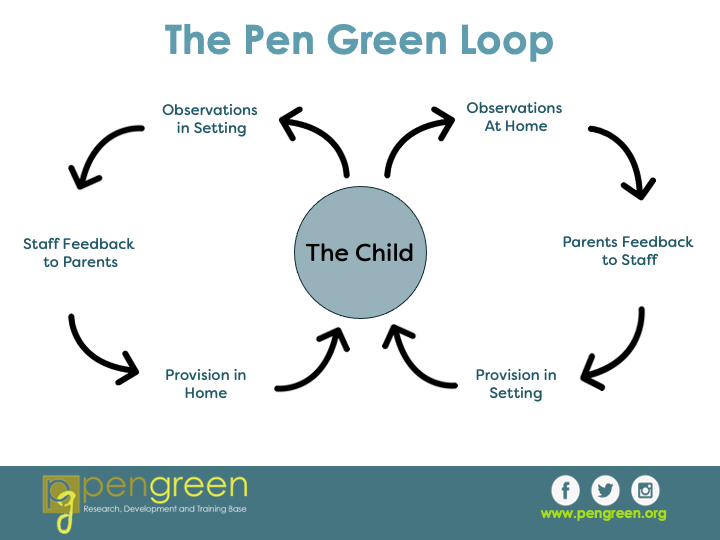
The Pen Green Loop (Knowledge sharing between families and professionals)
When there is a reciprocal exchange of information from home to the setting and from the setting to home, children will experience some continuity and a more consistent approach to their development and learning. The learning loop is a dynamic process whereby all the important adults in a child’s life give each other feedback. The feedback focuses on what seems to be centrally important to the child, and how and what children are learning in the home and in the setting. Early years practitioners have expert knowledge of the ‘public’ and generalised theories of child development, while the parents have ‘personal’ theories about the development of their child. It is the interaction between the two sets of theories or explanations about the child’s actions that produces a far deeper understanding of the child’s development and learning. All the important adults in any child’s life need to use this shared knowledge as a basis for engagement in a relationship with the child. It is worth re-stating with real emphasis, it is only through the combination of both types of information that a broad and accurate picture can be built of a child’s developmental process.
Graduated Response
The Graduated Response is where a practitioner ensures effective support is in place for a child where a need has been identified. Through this intervention, practitioners are working towards removing any barriers to learning and making sure that the environment is accessible for all children. The response should follow four stages, referred to as a ‘cycle’: Assess, Plan, Do, Review. By taking this approach early, decisions and actions can be revisited, refined and revised with growing understanding of the child’s needs and the support required to secure good progress and outcomes. For further information, refer to Chapter 6 of the SEND Code of Practice. SEND Code of Practice GOV.UK
Parents are the most important source of information about their child and should continue to be actively involved in the setting’s Assess, Plan, Do, Review cycle. Where concerns arise, these should be addressed through the Graduated Response process. It is anticipated that this process will allow parents/carers to share their insights of their own child. Practitioners need to understand the purpose of the Assess, Plan, Do, Review cycle within the context of their setting’s Graduated Response. They need to recognise that the Graduated Response does not begin when outside agencies are drawn in, but far earlier when the setting begins to explore different strategies and possible styles of support.
One Page Profile
This co-constructed document places the child at the centre and offers a unique image of them. The voices of the child and parent should be clear and apparent. The richest profiles are written in a positive and celebratory style, free from professional jargon. The one page profile will evolve over time as the child changes and develops. In this way, each updated one page profile offers another tool for celebrating the child’s development and progress. At times of transition the one page profile plays a vital role in ensuring important information is shared.
In the early years, the one page profile can often involve the adult transposing their thoughts and knowledge of the child. For the parents and carers, this is intimate knowledge and must be made apparent in the documentation.
Observation and Planning
An effective practitioner will use a variety of observation skills and techniques to gain an understanding of what a child is already:
- able to do
- showing mastery in
- competent in
- showing an interest in.
It is not necessary for observations to be written or recorded. The child’s experience must always be central to the thinking of every practitioner. The priority is that practitioners build up a deep and secure knowledge of each child they are caring for. The most effective pedagogy brings together a blend of different approaches. To support practitioners
to achieve this, they will need to invest time to regularly observe children and notice what they are doing. Establishing a child’s start point, will help you to provide enabling environments that allow for meaningful learning experiences and appropriately planned purposeful next steps based on children’s interests and needs. Babies and young children do not learn in a fixed way and their learning is often driven by their interests. Practitioners must plan for experiences both indoors and outdoors, we need to be flexible when planning for all children as well as responsive to children’s ideas and thoughts.
Reciprocal dialogue with parents is key throughout the time their child is with you. Reflecting on their own practice and professional judgements with colleagues and external partners will make sure that you are celebrating the whole child and recognising where they will benefit from additional support as they arise in the setting and at home.
Schematic Play
Athey defines schema as ‘patterns of behaviour and thinking in children’s play’. Schemas are patterns of repeated actions and behaviours that can be observed in young children’s play as they explore and make sense of the world around them.
Schemas are an intrinsic part of child development and offer an important insight into how some children learn. A working knowledge of schemas offers practitioners a positive means to viewing and understanding a child’s actions and creating enabling environments for young children to take their ideas and learning further.
Whilst using schemas as a theoretical lens to frame observations, it is helpful to hold in mind schematic play can often look similar to, or even overlap some traits displayed by children on the autistic spectrum. Practitioners should remember that not one size fits all when observing children and frameworks should be based on individual children and the needs they present with.
Possible Lines of Direction
The ‘Possible Lines of Direction’ (PLOD) tool can help to capture the child’s interests, parents’ thoughts from home, and the practitioners’ ideas for future learning opportunities. When planning for children’s learning and development, it is helpful to start with the child’s interests and motivations as the central focus.
This is a live working document that can be amended, added to or renewed as the child’s interests change or their development progresses. The planned experiences, both indoors and outside, should lead to the child developing and extending their knowledge and skills, with opportunities to revisit these experiences to help consolidate their learning. Children are intrinsically motivated and are powerful thinkers and learners. With the right help, children will make progress. It is important that we allow children time to try out things for themselves, make mistakes, and hypothesise. Children may seek out resources or people to support them in piecing their learning together to make sense of the world around them. We are moving away from the idea of linear developmental approaches and assessments of children’s learning, where children have been judged against ages and stages. We must now concentrate on truly getting to know children as this will support practitioners to focus on the interests, skills, and knowledge that children already have and how they can build on this to help secure children’s learning and development.
In early years there can be a place for purposeful, proportionate written documentation that demonstrates what children can do, what they already know and what practitioners know about them as individuals. Written documentation can:
- inform formative assessments
- capture and celebrate progress overtime
- become supportive evidence for referrals where needed
- inform planning
- identify future learning opportunities.
Any written documentation should not be a long list of outcomes or a tick box that forms unnecessary data and evidence. It should not take practitioners away from children for long periods of time. It should be a rich and powerful celebration of a child’s individual learning journey or form part of a more specific assessment/referral process.
Demonstrating Progress
A child’s progress will be demonstrated when practitioners get to know the child and understand how they like to learn. The child’s ‘one page profile’, observations, video, photographs, and professional judgements can all be useful ways to demonstrate progress. This documentation should celebrate the child’s development, engagement and preferred approaches to learning. Observations are not mandatory and if recorded these should not be labour intensive.
For some groups of children, it is not always possible to demonstrate progress using a linear developmental framework. Children develop at their own rates, and in their own way, and children will focus on things that excite, challenge, and motivate them. When children with SEND are expected to fit within a linear developmental framework, it can become difficult to celebrate progress and leads to a deficit model (a focus on what the child is unable to do rather than celebrating what they can do). We must recognise and acknowledge that for some children their development and learning will be significantly different from their peers. Practitioners need to champion what children can do, not what they cannot achieve.
Any assessment pathways should align with and complement other assessment tools and frameworks and must place the child at the centre in line with:
- a multi-sensory approach in which the child’s earliest skills are the focus
- a small steps approach that seeks to encourage the extension and consolidation of emerging skills
- the more familiar ‘Graduated Response’ that identifies where a child appears to have not yet reached expected levels of development or where a child’s progress gives cause for concern leads to the identification of learning experiences and input that seems to bridge the gap. This could be demonstrated on a child’s individual action plan.
It is imperative that practitioners give consideration to the points above when seeking to identify individual needs and plan for meaningful learning experiences. Children will benefit greatly when practitioners adapt and differentiate their pedagogy to respond to individuals interests and preferred learning approaches. A summary of interventions and progress made could be recorded on an individual action plan as part of your setting’s Graduated Response.
Links to Online Resources
A Celebratory Approach to SEND Assessment in the Early Years
A Celebratory Approach to SEND Assessment in the Early Years Video Resource Library
Early Years Foundation Stage GOV.UK
Early Years Foundation Stage Profile Handbook GOV.UK
National Association for Special Educational Needs
New Zealand Framework for Evaluation